The question
What happens at the brain’s protective barrier?
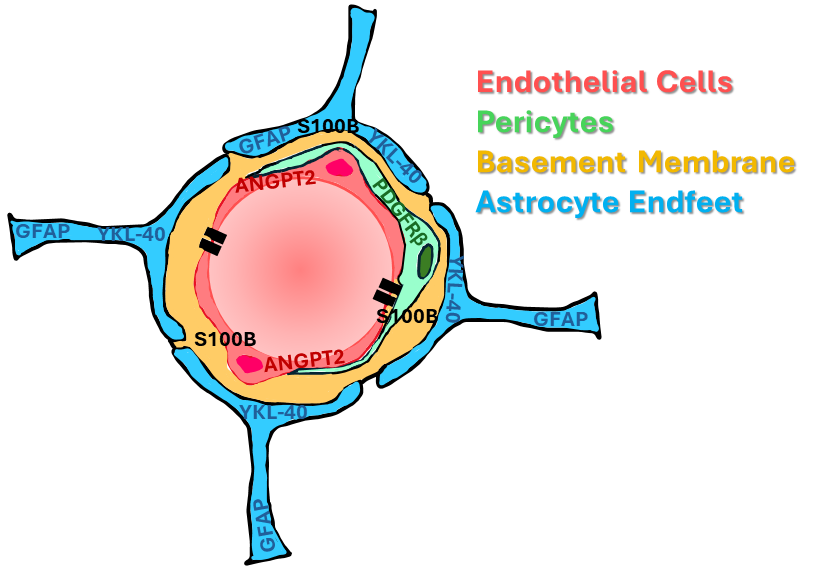
The blood–brain barrier helps control what passes from the bloodstream into the brain. Using samples from Latin American participants, this workstream investigates whether heat stress disrupts that barrier, and whether air pollution increases vulnerability to inflammation and brain injury.
Our approach
The biology of vulnerability
Measure early signals
Analyse blood-based markers of blood–brain barrier dysfunction, inflammation and neuronal injury, prioritising 1,350 ReDLat participants with MRI data.
Compare exposure windows
Investigate heat in the days before blood collection and cumulative exposure over years, including whether long-term fine-particle pollution modifies these associations.
Understand susceptibility
Examine differences by age, sex, socioeconomic circumstances and existing health conditions, and assess biomarkers carried by astrocyte-derived extracellular vesicles.
What we aim to deliver
Planned outputs
- Candidate blood and extracellular-vesicle biomarkers
- A proposed composite blood–brain barrier damage index
- Evidence on exposure windows and susceptibility
Workstream leadership
Dr Diane Re
Columbia University
Dr Claudia Duran Aniotz
Latin American Brain Health Institute (BrainLat)